
Letters from the Board: April 2026
By Dr. Eric Posada on 4/29/2026

Selecting Choral Repertoire to Enrich Worship
Whether you trained in seminary, balance the dual roles of academic and church choir director, or serve faithfully as a volunteer musician, repertoire selection is truly an art form. Though the process can at times feel tedious or overwhelming, it is one we must learn to embrace. At its core, our work exists to enrich worship—to make a joyful noise and to engage body, mind, and spirit within our singers, within one another, and within the congregation we serve.
Today, let us place repertoire selection under the magnifying glass and explore best practices for choosing choral music with intention and purpose. To begin, it may be helpful to reflect carefully on the following guiding questions.
1. What type of choir or choirs do you direct?
Consider the voicing and overall makeup of your ensemble. What are your singers’ ranges, strengths, and limitations? Common voicings include SATB, SAB, SSA, and TBB, but many smaller church settings rely on unison or two-part choirs. Voicing may also change from piece to piece throughout the season. It is especially important to distinguish between two-part and two-part mixed settings based on your choir’s composition, as a two-part mixed anthem may prove more practical than one written exclusively for soprano and alto voices.
2. What forces do you have available?
Begin with numbers: how many singers are in your choir, and how many per voice part? What types of accompaniment are available—piano, organ, guitar, or a cappella? Are additional instruments required or accessible? Might special ensembles be involved, such as brass, strings, or mariachi? Do any singers regularly cross traditional roles, such as women singing tenor?
3. What is the skill level of your choir?
Assess how comfortably your singers read music, how quickly they learn new repertoire, and how well they retain it from week to week. Which sections demonstrate strong part independence, and which require additional repetition or reinforcement? Consider whether the accompaniment sufficiently supports each vocal line, particularly in more complex textures.
4. How much time do you have to prepare?
Is this anthem intended for the coming Sunday, or are you planning well in advance for major seasons such as Advent, Christmas, Lent, or Easter? Can your choir realistically rehearse multiple pieces simultaneously, or would a more focused approach better serve them?
5. What type of anthem are you seeking?
Do you have a particular theme or scripture in mind, or are you searching for a specific form such as an anthem, cantata, or larger extended work? Are there accessible arrangements of familiar or beloved pieces that may serve your needs?
6. Are there additional considerations to keep in mind?
Is this music intended for a Praise & Worship service or a more traditional liturgy? Where are you in the liturgical calendar, and are there denominational expectations that should guide your choice?
In summary, always program repertoire for the ensemble standing in front of you. Avoid selecting music solely because it is a personal favorite or because you once performed it yourself; the choir you sang it with may not be the choir you now direct. Consider not only whether your ensemble can perform the work, but whether they will find meaning, growth, and joy in the learning process. Ask yourself whether the piece offers compelling musical moments, develops specific skills, and conveys text that aligns with scripture and season. Ultimately, our goal must move beyond correct notes and rhythms toward music that has the power to touch hearts and souls—both of those who sing it and those who hear it.
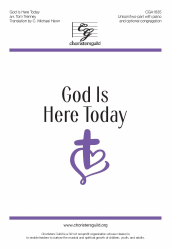
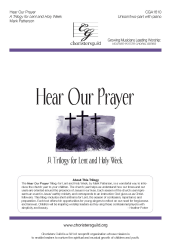
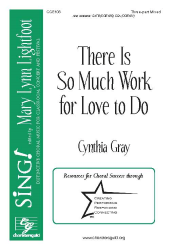
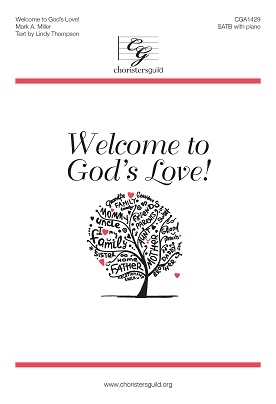
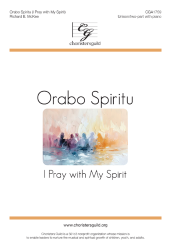
Click the cover images to preview the scores and audio samples and see how these pieces could fit in your next program. Please note these are ranked in order by voicing and difficulty.

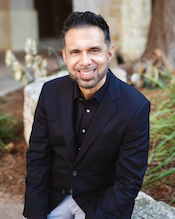
Eric Posada is a dynamic conductor, choral educator, and mentor committed to uniting communities across the globe through profound and transformative choral experiences. Dr. Posada currently serves as Director of Choral Activities at Angelo State University. Previously, he held academic appointments at the University of North Carolina at Charlotte, Tyler Junior College, Texas A&M University, and Texas Tech University. He was recently elected Vice President for College and New Professionals of the Texas Choral Directors Association (TCDA) and is the Founder and Artistic Director of both Pasión and the San Angelo Chorus.
Dr. Posada has presented interest sessions at more than thirty international, national, regional, and state music conferences. His professional chorus, Pasión, earned third place in two categories—Choral Performance and Performance of American Music—in The American Prize and was selected through refereed audition as a performing choir for the 2021 TCDA Summer Conference. He has held conducting positions with civic ensembles including the East Texas Symphony Chorus, Brazos Valley Chorale, The Lubbock Chorale, and the San Angelo Chorus. In addition to his academic and community work, Dr. Posada has served for nineteen years as a Director of Music in liturgical settings, highlighted by a performance at Notre-Dame de Paris. Sought after as a Spanish poetic translator, Dr. Posada was a member of The Ponce Project Foundation team that published and presented Manuel M. Ponce: Obra completa para voz, Vol. 1, 25 canciones folclóricas mexicanas—the first anthology of Ponce’s vocal music—at the National Association of Teachers of Singing (NATS) Conference. Moreover, through the Choristers Guild, he served as co-translator of Mark Burrows’s Worship and Wonder: Story, Song, and Ritual for Preschoolers, Vol. 1.
Dr. Posada’s international work includes performances in Germany, Canada, and France, as well as collaborations with distinguished conductors such as Donald Neuen, Paul Salamunovich, and Tim Brown. In March 2024, he served as Guest Conductor for Manhattan Concert Productions, leading a performance of Ola Gjeilo’s Sunrise Mass at Carnegie Hall with the Masterwork Festival Chorus, the Angelo State Chorale, and the New York City Chamber Orchestra. During his tenure at Angelo State University, the choral program has experienced remarkable growth, performed at the College Music Society’s South Central Regional Conference, and served as a demonstration choir for the NATS International Conference and the Texas Music Educators Association Conference. Each summer, Dr. Posada hosts conducting symposia for conductors of all levels and has partnered with leading artists including Victor C. Johnson, Marques L. A. Garrett, Mari Esabel Valverde, Christi Jones, Laura Farnell, Emily Crocker, Carlos Cordero, and Patrick Vu. In June 2026, he will conduct a masterwork chorus in Vienna and Salzburg featuring Haydn’s Te Deum and Mozart’s Regina Coeli and Laudate Dominum.
Dr. Posada’s postdoctoral studies include work with GRAMMY Award–winning conductor Jerry Blackstone and Dan Bara. He earned the Doctor of Musical Arts degree in choral conducting from Texas Tech University in 2015, where he served as a graduate assistant under the mentorship of Richard Bjella. He completed the Master of Music degree in choral conducting at Sam Houston State University as a graduate assistant to Allen Hightower. Dr. Posada holds the Bachelor of Music degree in Teacher Preparation from Texas Tech University, where his conducting teachers included John Dickson, Pamela Elrod, and Gary Lewis.