
Five Ways to Encourage Vocal Exploration in Young Singers
By Dr. Meg Granum Gurtcheff on 3/3/2026
Children are saturated with sounds of adult voices, autotune, and digital enhancement, and they often don’t yet have a sense of variety of sounds their own voices can make. As such, it’s up to us to help them engage their full repertoire of vocal sounds and offer them tools for vocal exploration.
As with so many things, a great way to get children to learn new skills is through play, fun, and imagination. Here are five ways to encourage vocal exploration in young singers:
1. Vocal Vibes (suggested for 2nd-5th grade)
Adapted from Madeline Bridges’ Sing Together Children
I have expanded on her Vocal Vibes chart as found on pg 11, to include additional vocal sounds. I have each “square” on a color-coded piece of construction paper, laminated, and attached to my wall with push pins. Each rehearsal, I select a few helpers to “compose our vocal vibes warm up” so they have agency in crafting the sounds we make (but always within the guidelines I’ve laid out through the paper options I’ve selected). This process both allows the young singers to compose, practice their music literacy skills (each paper is 4 beats worth of sounds), and to explore diverse sounds from “scoops” to “meow” to rolled “rrrr”, all while selected and led by their classmates.
2. Sports metaphors/throwing different balls and toys (all ages)
A classic but excellent reminder of the link between kinesthetic learning and vocal production, this exercise allows young singers to use their imagination, move their bodies, and link gesture with sound. Examples include:
- Throw a pretend frisbee across the sanctuary and let your voice follow its trajectory, “wiiiiiiiiiiiiiiiiiiiiiiiiiiiiiiiiiiiiii”.
- Bounce a pretend ping pong ball in your hands as you sing “we-o, we-o, we-o, we-o, we” [sol – mi, fa-re, mi-do, re-ti, do]. Then make it a pretend tennis ball. Now a beach ball. How does the sound change with the different density of the balls?
- Toss a pretend basketball at the pretend hoop on the wall. Let your voice follow its path. “Doh_______”
3. "We're going on a walk" animal sounds (suggested for younger children)
Director:
We’re going on a walk
To see what we can see.
There’s an animal over there, What could it be?
Child: It’s a _______ [lion, owl, kitten, bee, etc.]
All: _____ [roar, hoot, meow, bzzzzz, etc.]
4. Silly sounds game/Be My Echo (all ages)
Young singers always seem to enjoy seeing their director take on a silly role or posture. This activity allows for communal silliness and a chance for the singers to be creative. One word of caution, set up guidelines or boundaries for what constitutes appropriate sounds.
Director:
Please be my echo.
“Weeeeeeee” [vocal glide from high to low]
“Puh, Puh Puh” [bursts of aspirated air after a percussive “p”]
“Vvvvvvvv” [extended fricative v in upper register]
5. Draw your sounds in the air (suggested for all ages but especially helpful with K-2nd grade)
This is another kinesthetic gesture connector which engages children’s imagination. I often use the metaphor of a rollercoaster.
“Let’s make a rollercoaster with our voices and draw it in the air.” While taking your index finger or hand, start low, slowly moving upward, then a dramatic drop down, followed by several loops, all the while allowing your voice to change pitch accordingly.
As they mature, older singers may assist in leading this and create their own “roller-coasters” or vocal exploration “rides”.
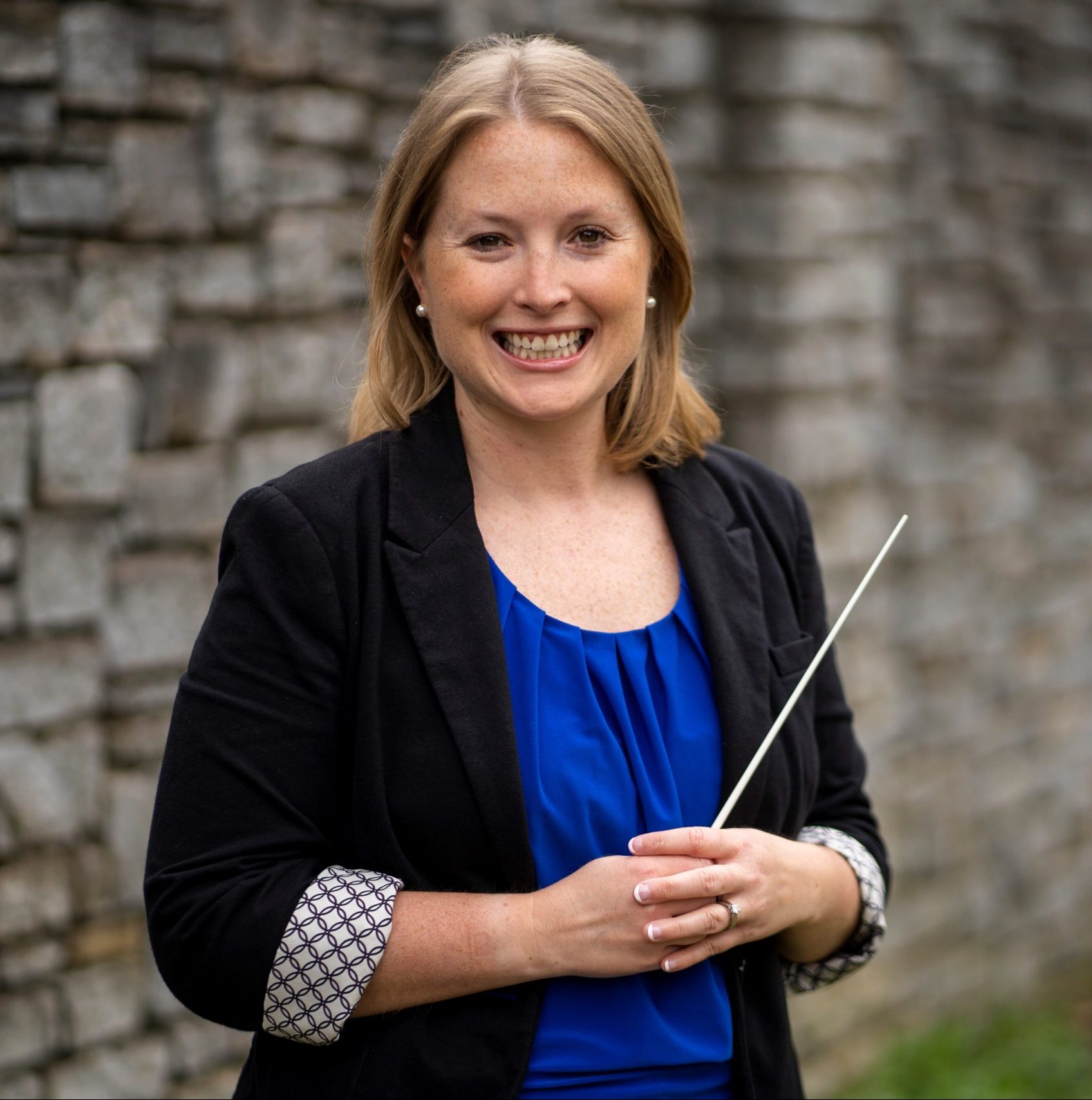
Dr. Meg Gurtcheff holds a Bachelors in Church Music, Conducting emphasis, from St. Olaf College in Northfield, MN. Her Masters in Sacred Music, Choral Conducting emphasis, is from Emory University. And her Doctor of Musical Arts, Choral Conducting, is from the University of Kentucky. She has been involved in church music her entire life. From a love of crafting liturgy, to her interest in both choral groups of all kinds and ages, and orchestras, Meg embodies both the breadth of knowledge, and the passion for, everything that our Music & Worship ministry encompasses.
In addition to being a conductor, Meg sings soprano, and plays viola, violin, and Hardanger Fiddle (a Norwegian folk instrument). She holds membership in a number of professional associations directly related to her areas of expertise.
Originally from Athens, GA, many of her family members are UGA grads (go Dawgs!). She herself always cheers for UGA..
In her spare time, Meg enjoys reading, walking, and all things Disney. And as someone with Celiac Disease (which means she can’t eat gluten), but who also loves pasta and chicken nuggets, she keeps dozens of gluten substitutes and favorite gluten- free treats in the family kitchen. Like Dove chocolate!